Skip to main content
IPTV Sverige | Billigaste & Största IPTV

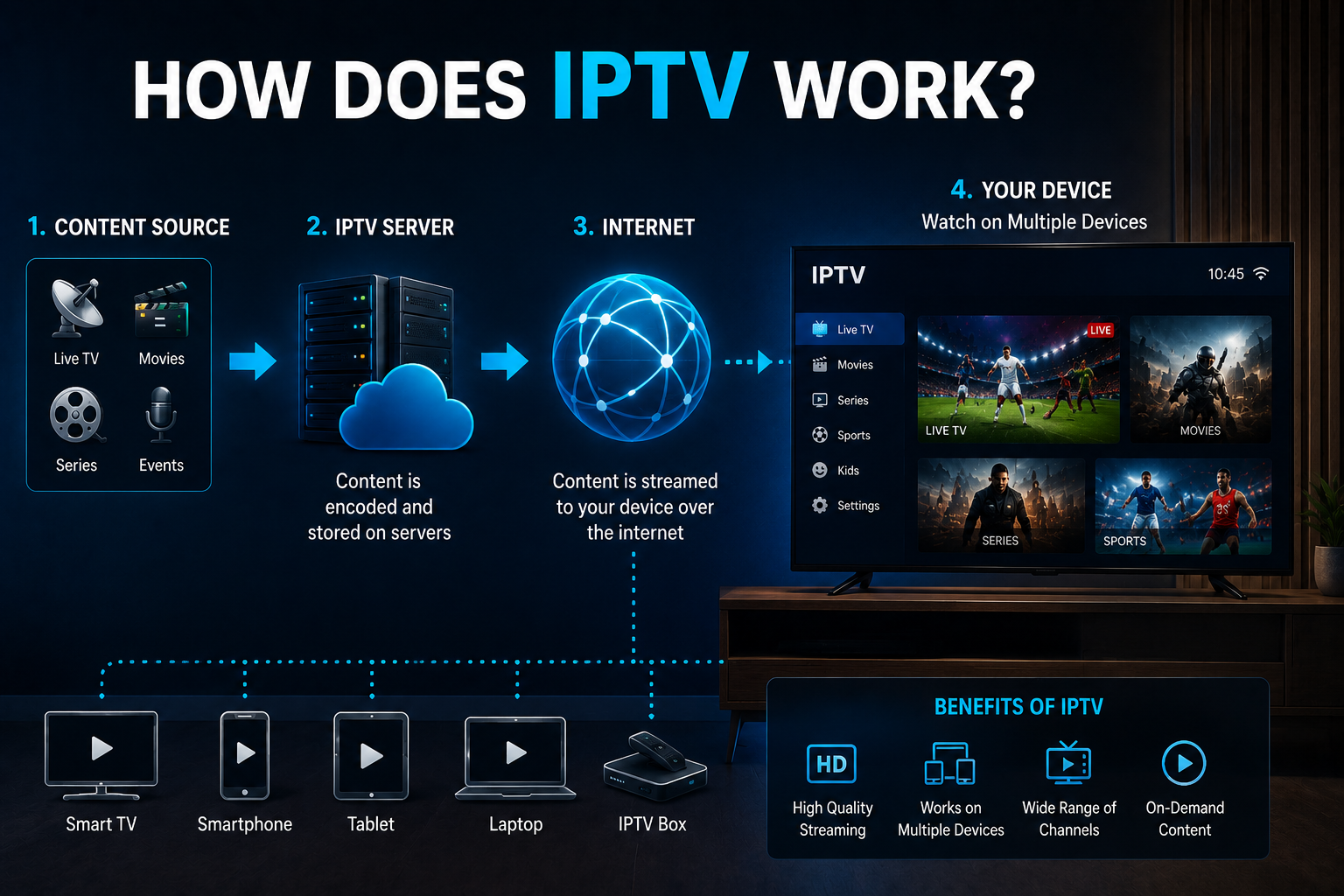
If you have ever searched “how does iptv work”, the simplest answer is this: IPTV delivers television through an internet connection instead of cable, satellite or terrestrial broadcast signals. You still watch live TV, sports, movies and series on a screen, but the signal reaches your device as internet data.
That sounds technical, but the user experience is familiar. You open an IPTV app on a Smart TV, Apple TV, Android box, iPhone, tablet, computer or IPTV box. The app checks your login or playlist, loads channels and plays the stream. Behind that simple click, several systems work together: content servers, encoding, playlists, middleware, EPG data, apps, internet routing and your home network.
What Is IPTV?
IPTV stands for Internet Protocol Television. It is a way of delivering TV content through IP networks rather than traditional TV infrastructure. InoRain explains IPTV as television delivered through an IP network instead of cable, satellite or terrestrial signals, with support for live TV and on demand content across smart TVs, set top boxes, phones, tablets and laptops.
The important part is that IPTV is a delivery method. It is not automatically legal or illegal, premium or cheap, stable or unstable. Those details depend on the provider, content rights, server quality, app, device and internet connection.
Competitor Analysis
The first competitor is a Reddit discussion where users explain IPTV in plain language. The strongest point is simplicity: one user describes IPTV as TV supplied through the internet, while cable comes through coaxial cable and satellite comes from satellite signals. The thread also covers practical benefits like no dish, no cable installation and the ability to watch on smart TVs, boxes, laptops, phones and tablets. It also mentions drawbacks such as internet dependence, network load and mixed channel availability.
The second competitor, InoRain, is more structured and technical. It explains content acquisition, encoding, IPTV middleware, EPG, authentication, billing, DRM, multicast for live channels, unicast and CDN delivery for on demand content. It also covers IPTV boxes, VOD, time shifted TV, live TV, OTT comparison, legality and infrastructure challenges.
What both competitors miss is a clear home user explanation. Reddit is easy to understand but scattered. InoRain is detailed but written partly for providers and ISPs. This guide bridges that gap by explaining the technology in plain English for people choosing IPTV in Sweden.
The Simple IPTV Flow
Step 1: Content Is Collected
The IPTV provider first collects content sources. These can be live channels, movies, series, sports streams, catch up TV or video on demand libraries. In a professional IPTV system, this stage is often called content acquisition or ingest.
For live TV, the provider receives a feed and prepares it for internet delivery. For movies and series, files are stored on servers and made available when the user selects them.
Step 2: Video Is Encoded
Raw video is too large to stream efficiently. It needs to be encoded into a format that devices can play. Common codecs include H.264 and H.265, while newer systems may also use AV1. InoRain describes encoding as part of the IPTV workflow and notes that adaptive profiles are created so streams can scale to a viewer’s connection.
This is why the same channel may appear in HD, FHD or 4K. The provider prepares different versions so the player can choose the best one for your device and network.
Step 3: The Stream Is Packaged
After encoding, video is packaged for delivery. Many modern streaming systems split video into short segments rather than sending one huge file. Cloudflare explains that adaptive bitrate streaming uses smaller video segments and lets the player switch quality depending on bandwidth and device conditions.
This is why your IPTV stream may drop from 4K to HD for a moment instead of stopping completely. A good player tries to keep video moving even when the network changes.

How Live IPTV Works
Live IPTV is the closest version to normal TV. You choose a channel and watch what is happening now. The provider sends the live stream to your app or box, and your device decodes it on screen.
For large audiences, providers may use multicast in managed networks, where one live channel stream can serve many viewers efficiently. For open internet delivery, unicast and CDN based delivery are common, where each viewer receives a separate stream path. InoRain describes multicast for live channels and unicast plus CDN delivery for on demand titles.
For users, this means live IPTV quality depends heavily on server load, routing, internet speed and the IPTV app.
How VOD Works
VOD means video on demand. Instead of watching a channel schedule, you choose a movie or series and start it when you want. InoRain lists VOD as one of the main IPTV service types, alongside live TV, time shifted TV and TV on demand.
VOD usually behaves more like Netflix or other streaming apps. It can buffer ahead, resume playback and sometimes adapt more smoothly than live sport because it is not tied to a real time broadcast.
IPTV Apps, Boxes And Devices
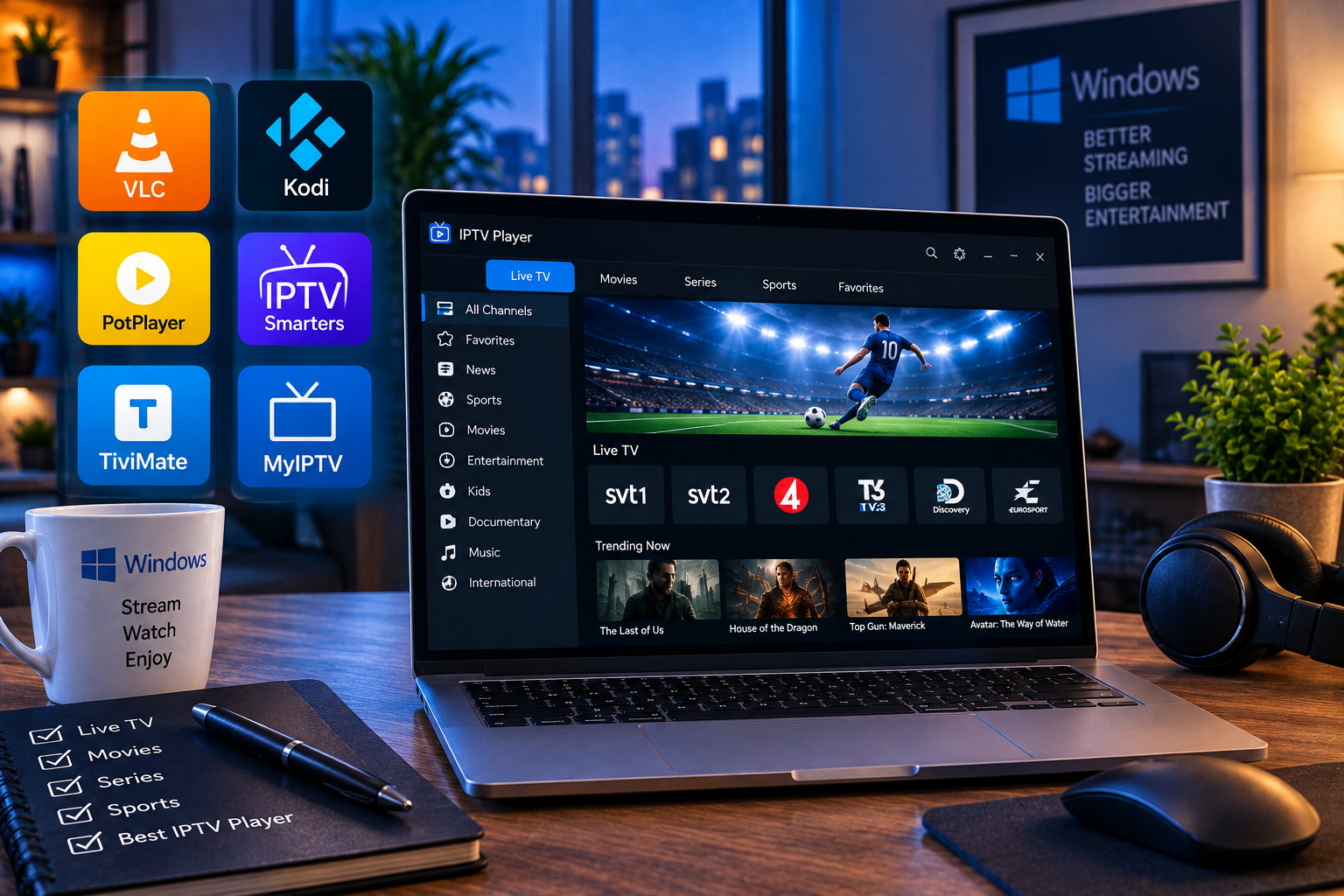
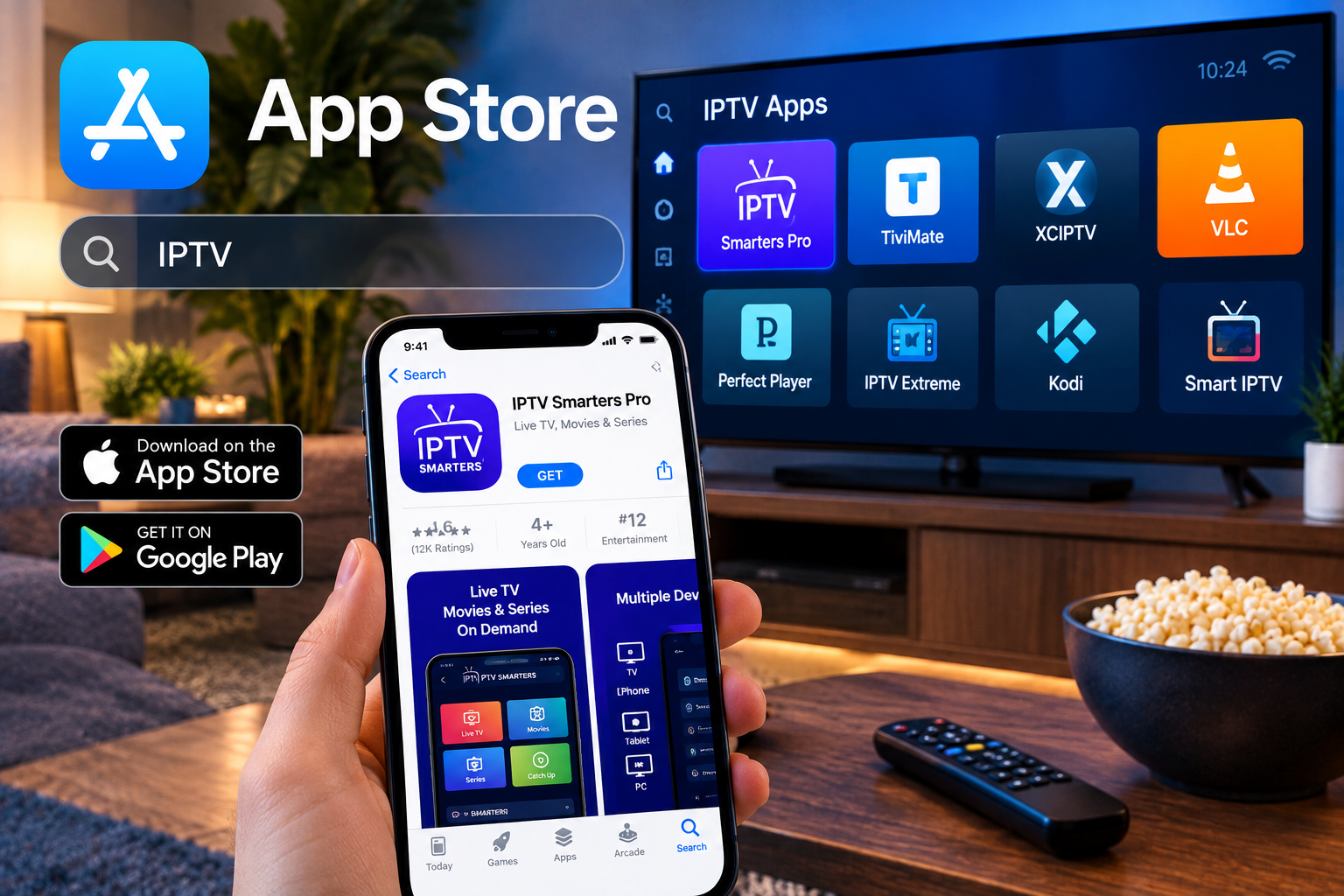
IPTV needs a player. That player can be a Smart TV app, Android TV app, Apple TV app, Fire Stick app, Windows player, Mac player, mobile app or dedicated IPTV box.
An IPTV box connects to your TV and decodes the stream. InoRain explains that a set top box receives the operator’s signal, handles authentication and renders the channel lineup or on demand library on screen.
For most homes, the best device is the one that is stable, easy to control and compatible with your login method. Smart TV is clean because there is no extra device. Apple TV and Android TV often feel faster. A mobile app is best for travel.
If you want to match the right app with your device, start with a practical IPTV installation guide before entering M3U, Xtream Codes or portal details.
What Are M3U And Xtream Codes?
M3U is a playlist format. It contains links to channels and sometimes logos, group names and metadata. M3U8 is a related playlist style often used for HLS streaming. Cloudflare shows that HLS manifests commonly use a video.m3u8 format, while DASH uses a different manifest format.
Xtream Codes is a login style where you enter server URL, username and password. Many IPTV users prefer it because it can organize live TV, movies, series and EPG more clearly than a raw M3U link.
Portal login is common on some IPTV boxes. The provider gives you a portal URL, and the box connects through a TV style interface.
What Is EPG?
EPG means Electronic Program Guide. It is the TV schedule you see inside the app. InoRain describes EPG as the on screen channel and schedule grid that shows what is playing now, what comes next and can connect to features like catch up or recording.
EPG is not just a nice extra. It makes IPTV usable. Without it, a large channel list becomes hard to navigate. If the guide is empty, wrong or one hour off, the issue may be the EPG source, time zone, channel naming or app settings.
IPTV Vs Cable And Satellite
Cable TV sends signals through physical cable infrastructure. Satellite TV sends signals from satellites to a dish. IPTV sends video as data through your internet connection.
The Reddit discussion explains this difference clearly: IPTV is TV over the internet, while cable and satellite rely on different signal paths. Users also note that IPTV avoids dish installation but depends on internet quality.
The benefit is flexibility. IPTV can work on many devices, not only one cable box. The downside is that your home network matters. Poor WiFi can ruin a good IPTV package.
IPTV Vs OTT Streaming
OTT services also use the internet, but they are usually standalone apps like Netflix, YouTube or Prime Video. IPTV is often more structured around live TV channels, program guides and subscription based channel packages.
InoRain explains that OTT works over the internet without cable or satellite, while IPTV is often more structured around live broadcasts, on demand content and dedicated interfaces.
In practical terms, OTT is app first. IPTV is channel first. Many users want both: live TV for sport and news, plus VOD for films and series.
Why IPTV Buffers
Buffering happens when your device cannot receive video fast enough to keep playback smooth. The cause can be weak WiFi, overloaded servers, poor routing, an old Smart TV, a bad app, too many devices using the network or a stream quality that is too high for your connection.
Netflix recommends at least 3 Mbps for HD 720p, 5 Mbps for FHD 1080p and 15 Mbps for UHD 4K on its platform. IPTV can need more real world margin, especially for live sport, because server load, app performance and home network quality also matter.
If IPTV buffers, test the same channel on another device. If it works on your phone but not your TV, the TV app or WiFi may be the problem. If it buffers everywhere, the provider or internet connection may be the issue.
How Adaptive Quality Helps
Adaptive bitrate streaming is one reason modern IPTV can feel smoother than older internet video. Cloudflare explains that adaptive bitrate streaming adjusts video quality based on network conditions to improve playback, and that the player can move to lower or higher quality as bandwidth changes.
This is why a stream may briefly look softer instead of freezing. The player is choosing stability over perfect quality. For sport, many users prefer stable FHD over unstable 4K.
How IPTV Works On Different Devices
Smart TV
A Smart TV app is convenient because everything happens on one device. The challenge is that older TVs may have slower processors and limited app support.
Apple TV And Android TV
These devices often provide smoother app performance, better updates and stronger remote control navigation than older TV apps.
iPhone And Android
Mobile IPTV works well for travel and casual viewing. Use WiFi when possible, because HD and 4K streaming can use a lot of data.
Windows And Mac
Desktop IPTV is useful for testing playlists, watching at a desk or troubleshooting provider issues.
For users who want a TV first setup, a Smart TV IPTV guide can help choose the right app and login method.
How Providers Keep IPTV Organized
An IPTV provider uses middleware to manage users, subscriptions, channel groups, EPG, billing, authentication and sometimes DRM. InoRain describes middleware as the layer that handles channel lineups, EPG, authentication, billing and content security.
This is why two IPTV services can look different even when played on the same app. One may have clean categories, good EPG and fast channel loading. Another may feel messy because the backend is poorly organized.
When comparing Viking IPTV with other options, use the same device, same app and same internet connection. That gives a fair test of the provider rather than mixing app and network problems.
Is IPTV Legal?
IPTV technology is legal. The legal question is whether the content is licensed. PRV explains that illegal streaming services make film and music files available without permission from rights holders and warns that users may expose personal information or support criminal activity through illegal services.
A legal IPTV service should be clear about terms, support, payment, content access and user responsibility. Avoid anonymous services that promise every premium channel at impossible prices with no company details.
Quick Home Setup Checklist
Choose the right device first. Use Ethernet where possible for Smart TV or IPTV box. If you use WiFi, place the router close to the TV. Confirm whether your provider gives M3U, Xtream Codes or portal login. Use an app that supports that format. Test EPG, live sport, movies, series and channel switching before committing to a long plan.
Keep your app updated, restart the router when problems begin and avoid sharing your playlist or login details publicly.
FAQ
How Does IPTV Work In Simple Words?
IPTV sends TV channels and video content through your internet connection. Your app or box receives the stream, decodes it and shows it on your screen.
Do I Need A Box For IPTV?
Not always. IPTV can work on Smart TV apps, Apple TV, Android TV, Fire Stick, mobile, tablet, Windows and Mac. A box is useful when you want a smoother TV style experience.
What Internet Speed Do I Need For IPTV?
For basic HD, a stable connection matters more than a high number. For FHD and 4K, keep extra speed margin because live TV, sport and home WiFi can fluctuate.
What Is The Difference Between M3U And Xtream Codes?
M3U is a playlist link. Xtream Codes uses server URL, username and password. Xtream Codes is often easier for beginners because many apps organize content automatically.
Does IPTV Include Channels Automatically?
No, the app or box is only the player. Channels come from your IPTV provider or playlist.
IPTV works by turning TV into internet delivered video, then using apps, playlists, EPG data and streaming servers to bring live TV, sports, movies and series to your screen. For a Sweden focused IPTV service with HD, FHD, 4K, flexible packages and simple installation support, visit Sverige IPTV and choose a setup that fits your home.